When Should You Use Multiple Jars in Flowjar?
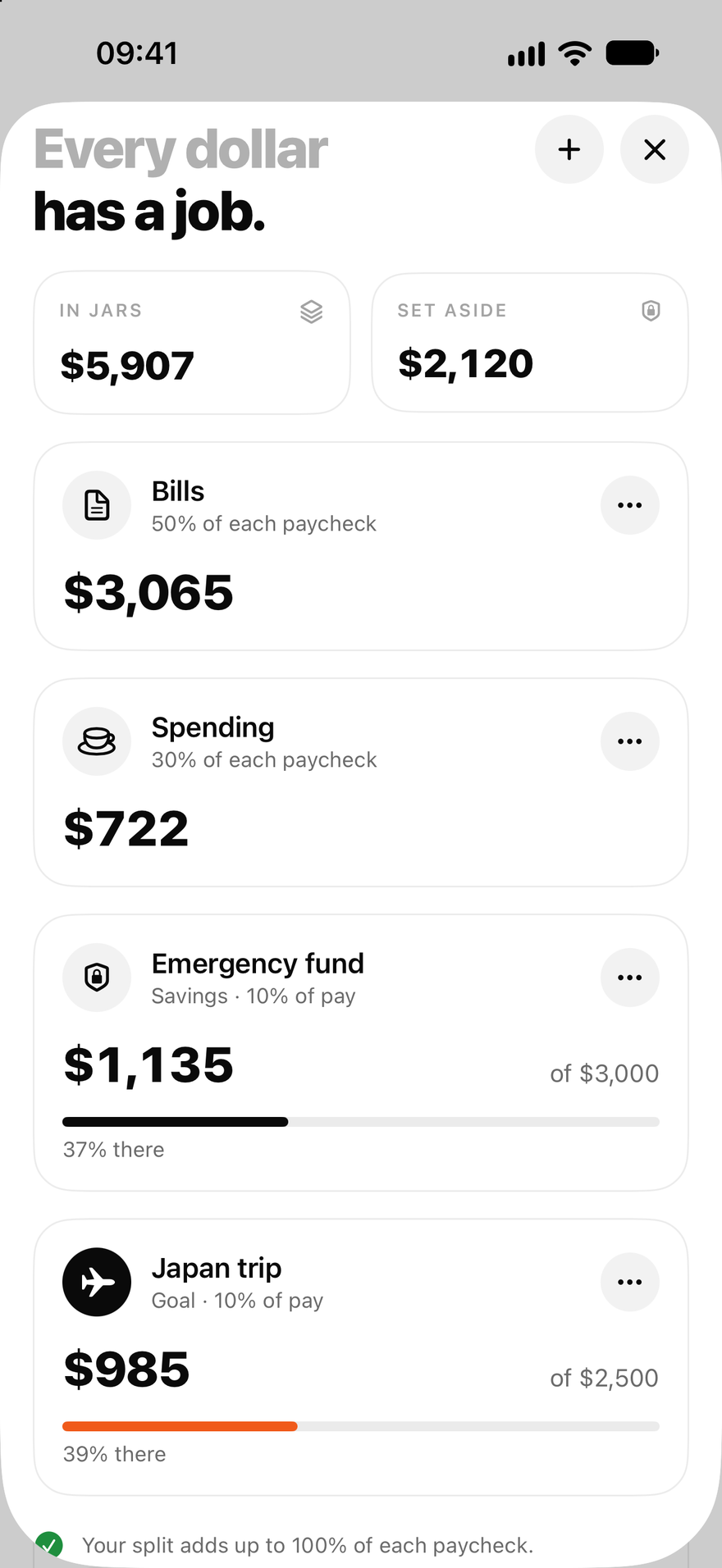
Jars separate money by purpose. One jar can represent bills, everyday spending, savings or a specific goal. Multiple jars can make your plan easier to read, but creating too many at once can slow the routine and make it unclear where an update belongs.
Start with broad groups
Try three or four jars first: required costs, flexible spending, a buffer and your nearest goal. After a few weeks, notice which categories keep getting mixed together. Split a jar only when the separation helps a decision, such as seeing whether insurance is covered or a travel goal is short.
A jar should have a clear name, a defined purpose and a simple update rule. If two jars always receive money on the same day in the same amount, they may duplicate each other. If one jar contains a rare payment, consider recording it as a goal or one-time item instead of adding another management layer.
Jars and forecasts are not separate books
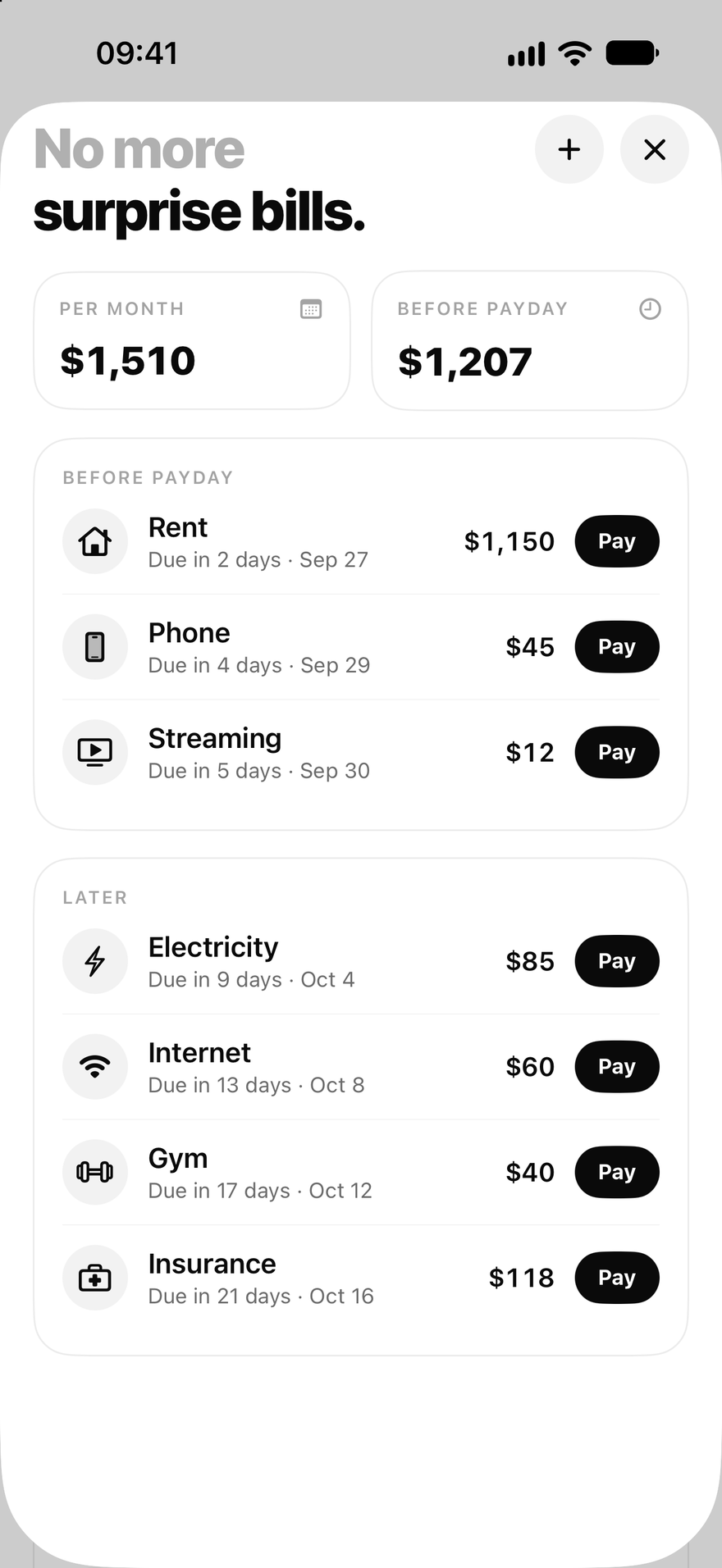
Review jars together with safe to spend and the forecast. Money assigned to a bill jar may still leave the account on a future date; savings goals still belong on the schedule. Assigning money to a jar does not mean the bill has been paid.
Rename or remove jars that no longer fit each month. A good structure is one you can open in minutes and understand immediately. Start organizing money in Flowjar.
Signs you have too many jars
If you move through several screens to find one payment, forget to update a jar or cannot explain the difference between two categories, combine them. Keep detail in notes and let jars represent the decisions you need to see each week.
When changing the structure, recheck bills and payment dates in the forecast. Renaming a jar does not move money or mark a payment as complete. Confirm the actual balance separately.
Note: Jars support personal planning; they are not separate bank accounts or financial advice.
A practical workflow for this topic
When you search for “When Should You Use Multiple Jars in Flowjar?”, the useful answer is usually a repeatable way to check the detail that matters. Use this Flowjar guide as a starting point, then confirm the current source before acting. The product can organize information and shorten a review; it cannot fill in missing facts or replace a professional decision.
Quick checklist before you act
- Choose the time window you are planning for.
- Record income, bills and set-aside money before judging a daily limit.
- Compare the forecast with the lowest point and upcoming obligations.
- Recheck the plan after a bill, payday or large purchase changes.
Keep the decision traceable: record the version, date and source you relied on when the detail may change.
Detailed step-by-step workflow
This extended section turns “When Should You Use Multiple Jars in Flowjar?” into a repeatable Flowjar workflow. The goal is not to create a longer checklist for its own sake. It is to make the important inputs visible, show what should be checked first, and leave a useful record of what was known at the time. That approach is especially helpful for cash-flow planning, bills, savings and a safe-to-spend decision. Read the steps in order the first time, then return to the relevant step when the situation changes.
Step 1: Define the question and the record you need.
Start with this action in Flowjar, then pause long enough to verify the result against the original source or observation. For “When Should You Use Multiple Jars in Flowjar?”, record the date, the relevant context and anything that was not available. A structured record is more useful when another person can understand what was checked without guessing what happened between two screenshots, notes or exports.
Step 2: Gather the original inputs before interpreting the result.
Start with this action in Flowjar, then pause long enough to verify the result against the original source or observation. For “When Should You Use Multiple Jars in Flowjar?”, record the date, the relevant context and anything that was not available. A structured record is more useful when another person can understand what was checked without guessing what happened between two screenshots, notes or exports.
Step 3: Review the result and record uncertainty or missing data.
Start with this action in Flowjar, then pause long enough to verify the result against the original source or observation. For “When Should You Use Multiple Jars in Flowjar?”, record the date, the relevant context and anything that was not available. A structured record is more useful when another person can understand what was checked without guessing what happened between two screenshots, notes or exports.
Step 4: Save the version, date and next action for later comparison.
Start with this action in Flowjar, then pause long enough to verify the result against the original source or observation. For “When Should You Use Multiple Jars in Flowjar?”, record the date, the relevant context and anything that was not available. A structured record is more useful when another person can understand what was checked without guessing what happened between two screenshots, notes or exports.
Quality checks and common mistakes
Long-form guidance is most useful when it explains the boundaries as well as the happy path. Before relying on a Flowjar record, run the checks below. They help separate a missing input from a negative result, an approximate value from a verified value, and a convenient summary from the original evidence.
Check 1
Do not start with the conclusion. Write down the question, the person or property involved and the time period first. In Flowjar, keep the source, context and limitation close to the record so the next review can reproduce the decision.
Check 2
Do not mix old and new records without a date. Keep the original observation visible when you add a correction or update. In Flowjar, keep the source, context and limitation close to the record so the next review can reproduce the decision.
Check 3
Do not treat a missing field as proof that the event, ingredient, expense or condition does not exist. In Flowjar, keep the source, context and limitation close to the record so the next review can reproduce the decision.
Check 4
Do not share a polished summary before checking the original image, note, label, receipt or export behind it. In Flowjar, keep the source, context and limitation close to the record so the next review can reproduce the decision.
Check 5
Do not use an app record as a substitute for a professional, medical, legal, financial or safety decision when the situation requires one. In Flowjar, keep the source, context and limitation close to the record so the next review can reproduce the decision.
Frequently asked questions
What should I verify before I rely on this guide?
For “When Should You Use Multiple Jars in Flowjar?”, use Flowjar to organize the observation and then verify the part that affects the decision. If a source, image, measurement or input is incomplete, mark it as incomplete instead of silently filling the gap. Add a date and a short note about the method used. When the consequence is important or the question sits outside the product’s purpose, confirm it with the current official source or an appropriate professional.
What should I do when the information is incomplete?
For “When Should You Use Multiple Jars in Flowjar?”, use Flowjar to organize the observation and then verify the part that affects the decision. If a source, image, measurement or input is incomplete, mark it as incomplete instead of silently filling the gap. Add a date and a short note about the method used. When the consequence is important or the question sits outside the product’s purpose, confirm it with the current official source or an appropriate professional.
How can I make the record easier to compare later?
For “When Should You Use Multiple Jars in Flowjar?”, use Flowjar to organize the observation and then verify the part that affects the decision. If a source, image, measurement or input is incomplete, mark it as incomplete instead of silently filling the gap. Add a date and a short note about the method used. When the consequence is important or the question sits outside the product’s purpose, confirm it with the current official source or an appropriate professional.
When should I ask for another source or a specialist?
For “When Should You Use Multiple Jars in Flowjar?”, use Flowjar to organize the observation and then verify the part that affects the decision. If a source, image, measurement or input is incomplete, mark it as incomplete instead of silently filling the gap. Add a date and a short note about the method used. When the consequence is important or the question sits outside the product’s purpose, confirm it with the current official source or an appropriate professional.
A practical review before you finish
Before closing this topic, read the title “When Should You Use Multiple Jars in Flowjar?” as a question rather than a promise. Confirm the current version of the information, check the original evidence, and record the next action in Flowjar. A useful record says what was observed, when it was observed, what remains uncertain and who should review it next. This makes the article easier to apply today and easier to revisit when the facts change.
See the product in action
Related guides
How to Budget During the Month You Start a New Job
Adjust Flowjar when changing jobs: first payday, transition costs, commuting, benefits, bills and buffers.
Budgeting Without Bank Linking: Benefits, Limits, and How to Start
Learn how to plan a budget without connecting a bank account, what to enter first, and when a manual budgeting model fits your needs.
Who is a budgeting app without bank connections for?
Compare manual budgeting with bank-connected apps and learn how to use Flowjar without a bank connection while keeping data current.
Feature walkthroughs
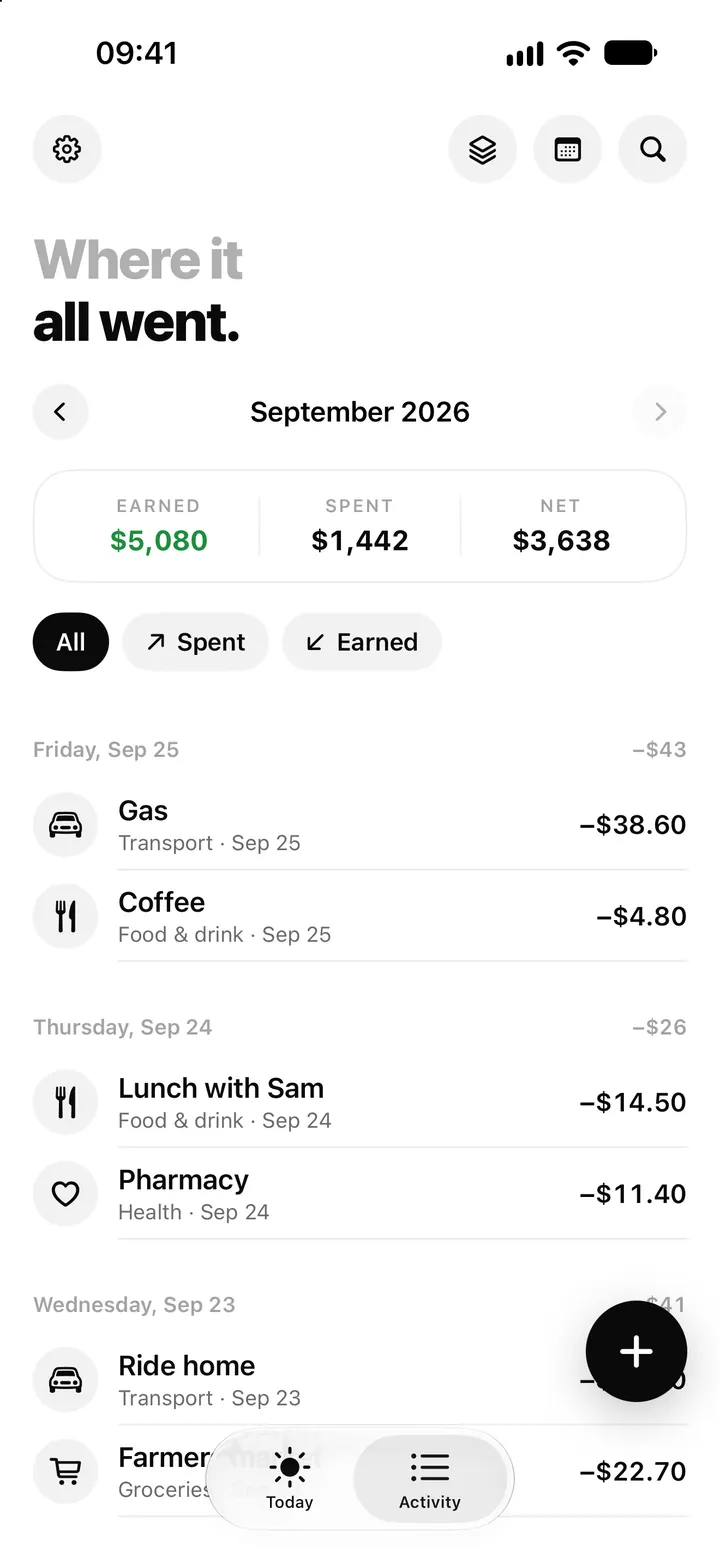
Flowjar Activity: list, calendar and back-filling a missed day
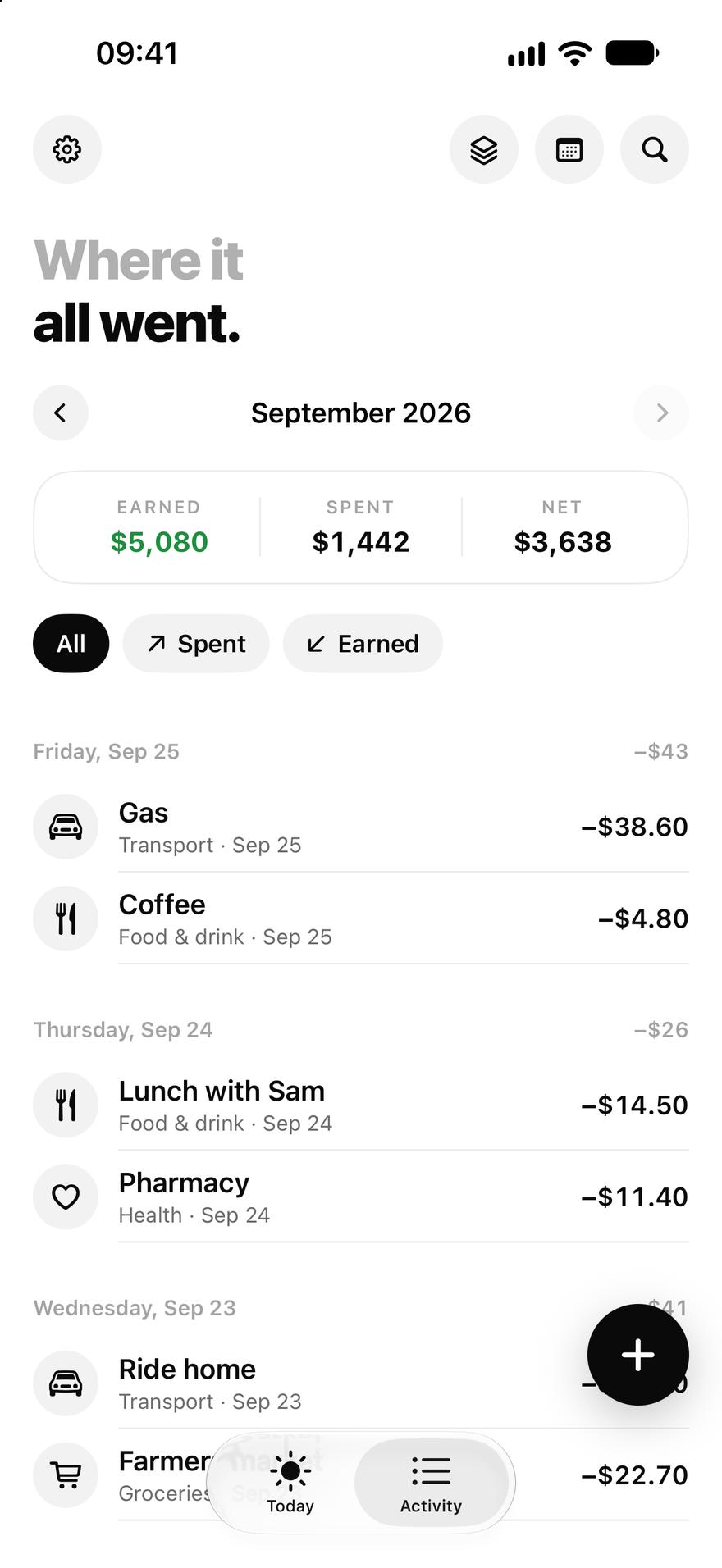
Flowjar Activity shows every entry by month as a list or a calendar, with Earned, Spent and Net. Tap to edit, swipe to delete, or tap an empty day to fill it.
Read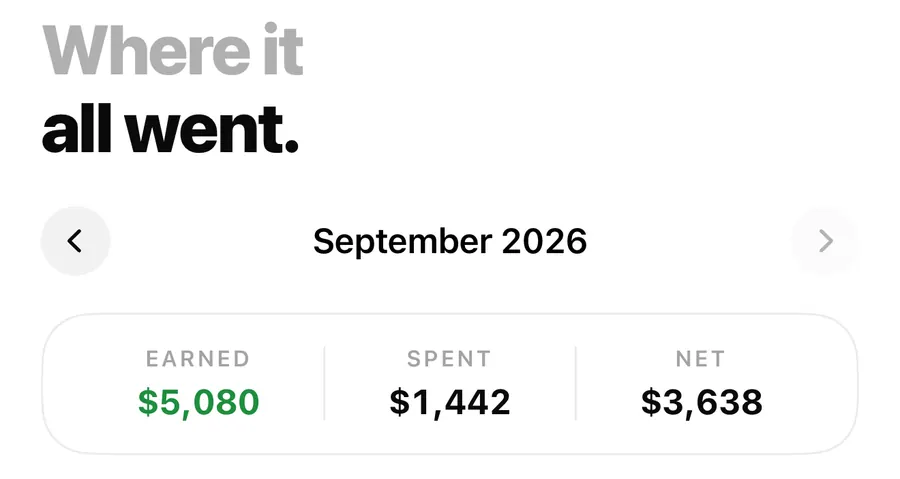
Flowjar month stats: spending by category, biggest day and no-spend days
Flowjar's Stats view breaks each month into spending and income by category, then shows your daily average, your biggest day and how many no-spend days you had.
ReadSearch in Flowjar: find any entry, jar, bill or money tool in seconds
Flowjar search looks through your notes, categories, amounts, jars, bills and every app feature at once, and History keeps what you opened lately on the iPhone.
Read